Right-of-Way Vegetation Management: Planning Utility Corridor Clearing with an Excavator Mulcher
Right-of-way vegetation management starts with a clear work plan. Utility corridors change from one section to the next: access points narrow, ditches cross the route, and vegetation shifts from brush to standing trees. Before equipment arrives, the crew needs to know what is included, what result the owner expects, and how to handle each segment.
That planning matters whether you are maintaining a utility corridor, clearing beside a road, or opening access around water and sewer lines. Our excavator-mounted equipment is built for demanding clearing work, including utility right-of-ways. A zone-by-zone plan helps the crew match the work to the route and make the most of the equipment on site.
Set the work limits and desired finish
Start with the owner’s scope. Mark the corridor boundaries, identify the sections included, and confirm which trees, brush, and stumps should be treated. A visible path or fence line may not define the approved work area. Use the project map, site markings, and instructions from the responsible project lead.
Next, define the finished result for each section. One stretch may call for brush removal. Another may need selected trees cut, stumps ground, or access opened around a structure. If mulch will remain, confirm where that is acceptable and whether any material needs separate handling. The crew should not have to guess what “clear” means once work begins.
Record any restricted areas, nearby infrastructure, or special handling instructions before mobilization. Utility marking and approval responsibilities vary by job, so confirm who provides them and who can authorize a change to the scope.
Divide the route into work zones
Long corridors are easier to manage when the crew can discuss specific sections rather than one continuous route. Divide the job into practical work zones and give each zone a clear reference on a map or field sheet. The zone does not need a complicated label. A station range, access point, or recognizable feature can be enough.
For each zone, note the intended treatment, access point, visible obstacles, desired finish, and any handoff needed before work starts. Include ditches, streams, culverts, fence lines, gates, and tight turns. These features can affect where an excavator can approach and what parts of the corridor an attachment can reach.
Use the zone plan to set a work sequence. Decide which sections need to be opened first for access and where the crew can stage equipment without blocking a route that must stay available. If another crew will follow, note when a section is ready for that handoff.
Plan around obstacles and access
Right-of-way work often follows infrastructure rather than a straight, open path. A ditch may run beside the route. A fence, stream, or culvert may limit the approach from one side. Walk or review those areas before the operator arrives, then identify the access and working position that fit the approved plan.
Our excavator-mounted attachments can reach over ditch lines, streams, culverts, fence lines, and other obstructions where a conventional mower may not reach. That capability can be useful along a corridor, but it does not remove the need to assess each site. Confirm the ground, working room, route access, and work limits with the project lead.
Mark entry points, staging areas, turnaround locations, and any passage that must remain open. If a zone has a narrow section or limited access, identify it in the field notes. Clear instructions help operators and support crews work from the same plan.
Match the equipment to the authorized work
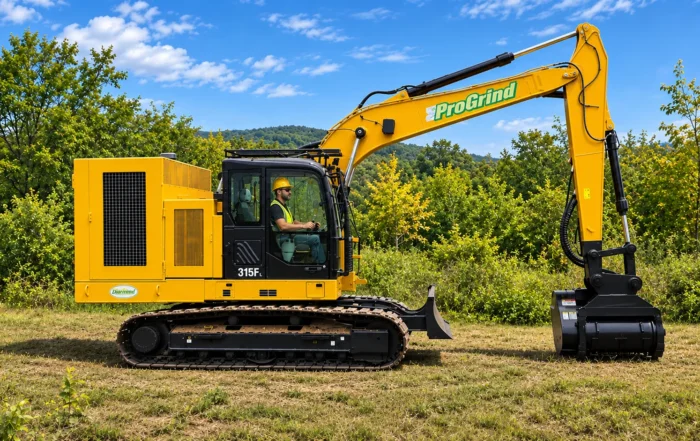
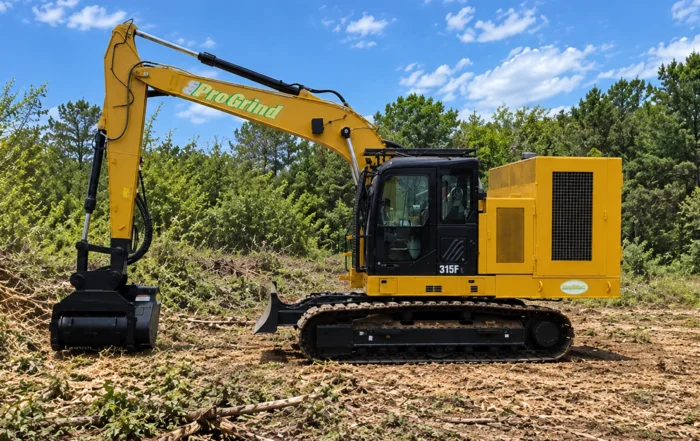
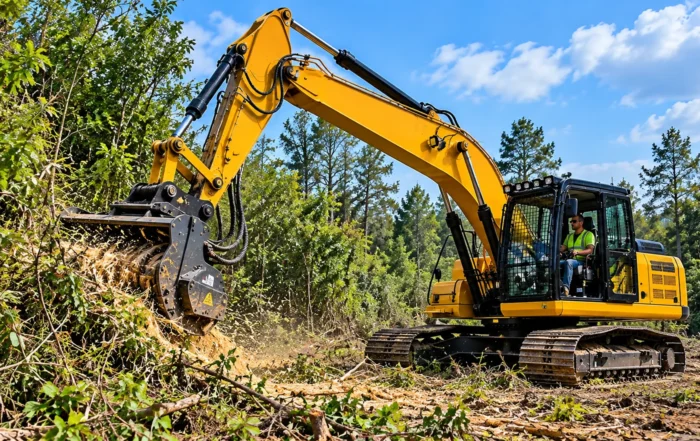
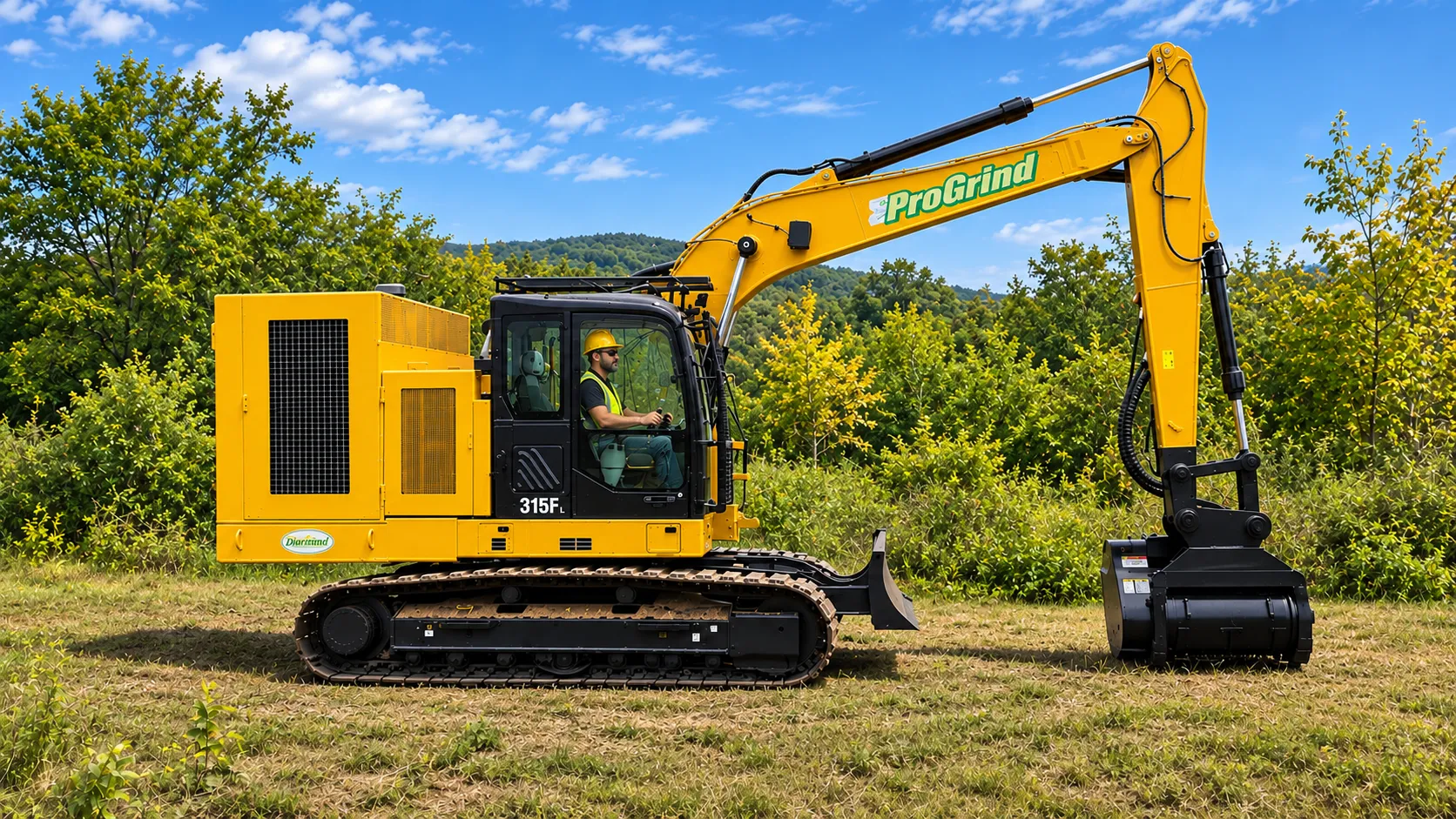
The attachment should fit the work the owner has approved. Our excavator-mounted systems are designed to cut brush and standing trees, grind stumps to ground level, and leave mulch. Our product lineup includes utility, water, and sewer right-of-way applications.
Our mulching system carries its own dedicated auxiliary power unit. That unit powers the cutting head; the excavator carries the attachment rather than supplying its cutting power. This is the key power-source distinction for a self-powered system.
Carrier fit still matters. Before a job, confirm carrier compatibility, mounting requirements, and the right configuration with ProGrind. Keep those equipment details separate from the site plan: the project lead defines the work, while the equipment conversation confirms that the attachment and carrier fit the approved job.
For more on the equipment and its applications, explore our product lineup and tree and stump grinder systems. Keep the corridor plan focused on the route, work limits, access, and expected finish rather than turning it into a general attachment-selection checklist.
Decide how the crew will handle material and changes
Before cutting begins, agree on what happens to the material. Our equipment leaves mulch after cutting and grinding, but the project owner should confirm whether it can stay in place in each zone. If the plan calls for a different finish, document who is responsible for the additional handling.
Set a simple way to record completed sections and exceptions. A marked map, zone list, or field note can show what is done, what needs follow-up, and where conditions differed from the plan. If the crew finds an obstacle or a change in scope, pause that part of the work and get direction from the person authorized to approve it.
Common planning mistakes to avoid
- Treating the whole route as one work area: Break the corridor into zones so the crew can see the scope and finish for each section.
- Assuming the boundary is obvious: Confirm the approved limits instead of relying on a path, fence, or tree line.
- Leaving material handling undecided: Agree on whether mulch remains in place before equipment starts cutting.
- Ignoring access constraints: Identify narrow approaches, staging points, and passages that need to stay open.
- Changing the scope in the field without approval: Record the condition and confirm the next step with the project lead.
Corridor work checklist
Before work begins, confirm:
- The authorized route, work limits, and vegetation treatment.
- The desired finish for each zone, including how mulch will be handled.
- Access points, staging areas, and routes that must remain open.
- Ditches, streams, culverts, fences, gates, and other obstacles.
- Who marks utilities or sensitive areas and who can approve scope changes.
- The work sequence and any crew handoffs.
- How completed sections, exceptions, and follow-up work will be recorded.
- Carrier compatibility, mounting requirements, and attachment configuration with ProGrind.
Frequently asked questions
What should a right-of-way vegetation management plan include?
Define the authorized limits, treatment, and desired finish for each section. Add access points, obstacles, staging needs, material handling, approval responsibilities, and a way to record completed work.
Can an excavator mulcher work around ditches and culverts?
Our attachments can reach over ditch lines, streams, culverts, fence lines, and other obstructions where a conventional mower may not reach. Whether a setup fits a specific job depends on the site and approved work plan.
Does a self-powered attachment still need to fit the excavator?
Yes. The attachment’s dedicated auxiliary power unit powers the cutting head, but the carrier and mounting still need to be compatible. Confirm the requirements and configuration with ProGrind.
Plan the corridor before work starts
A useful right-of-way plan gives the crew clear limits, a workable sequence, and a defined finish for every zone. Mark the obstacles, confirm access, and agree on how to record changes before the machine moves.
Our excavator-mounted systems are built for demanding clearing work, including utility right-of-ways. Explore the product lineup or request an excavator attachment quote to discuss your corridor work.

Recent Posts