Self-Powered vs. Excavator-Powered: The Real Difference Behind an Excavator Mulcher Attachment
Two excavator mulcher attachments can look almost identical on a spec sheet. On the jobsite, they can perform very differently. The reason usually isn’t tooth count or drum width. It’s where the cutting power actually comes from.
Some attachments pull all their cutting power from the excavator’s own hydraulic system. Others carry a dedicated auxiliary power unit and bring their own power to the job. That one design choice changes a lot. It affects how steady the cutting power stays. It affects how much strain the attachment puts on your excavator. It even affects how much you have to worry about matching machine and attachment before you buy. Understand it before you see the horsepower number on the brochure, not after.
Excavator-Powered vs. Self-Powered: What the Terms Actually Mean
An excavator-powered attachment has no engine of its own. It draws all its cutting power from the excavator’s auxiliary hydraulic circuit. That’s the same system that also runs the boom, the swing, and travel. Whatever flow and pressure the excavator can spare after those jobs is what the mulching head gets to work with.
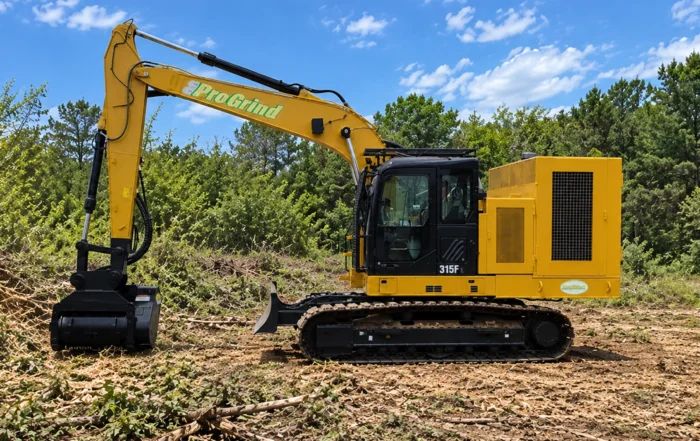
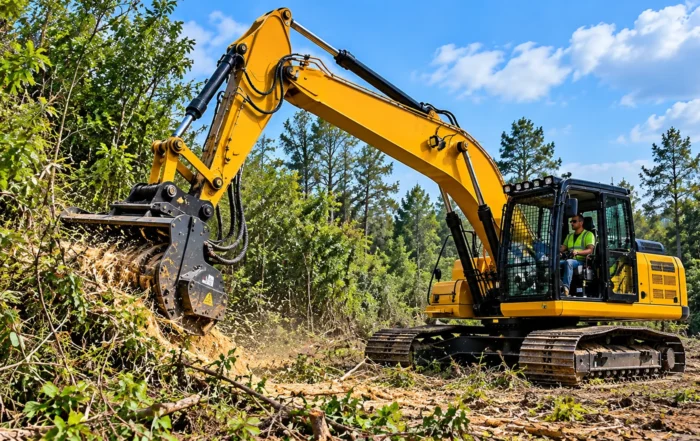
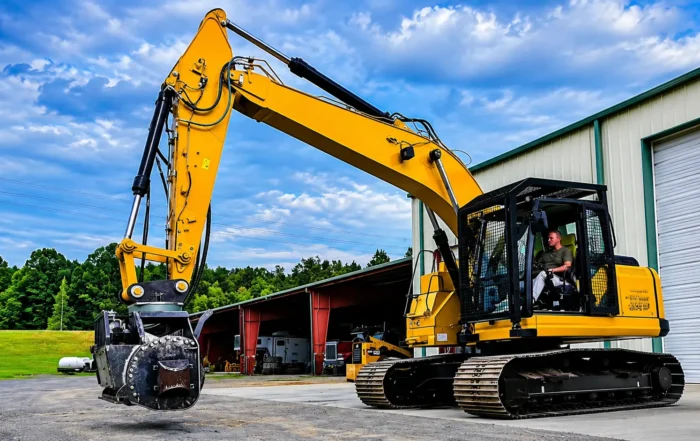
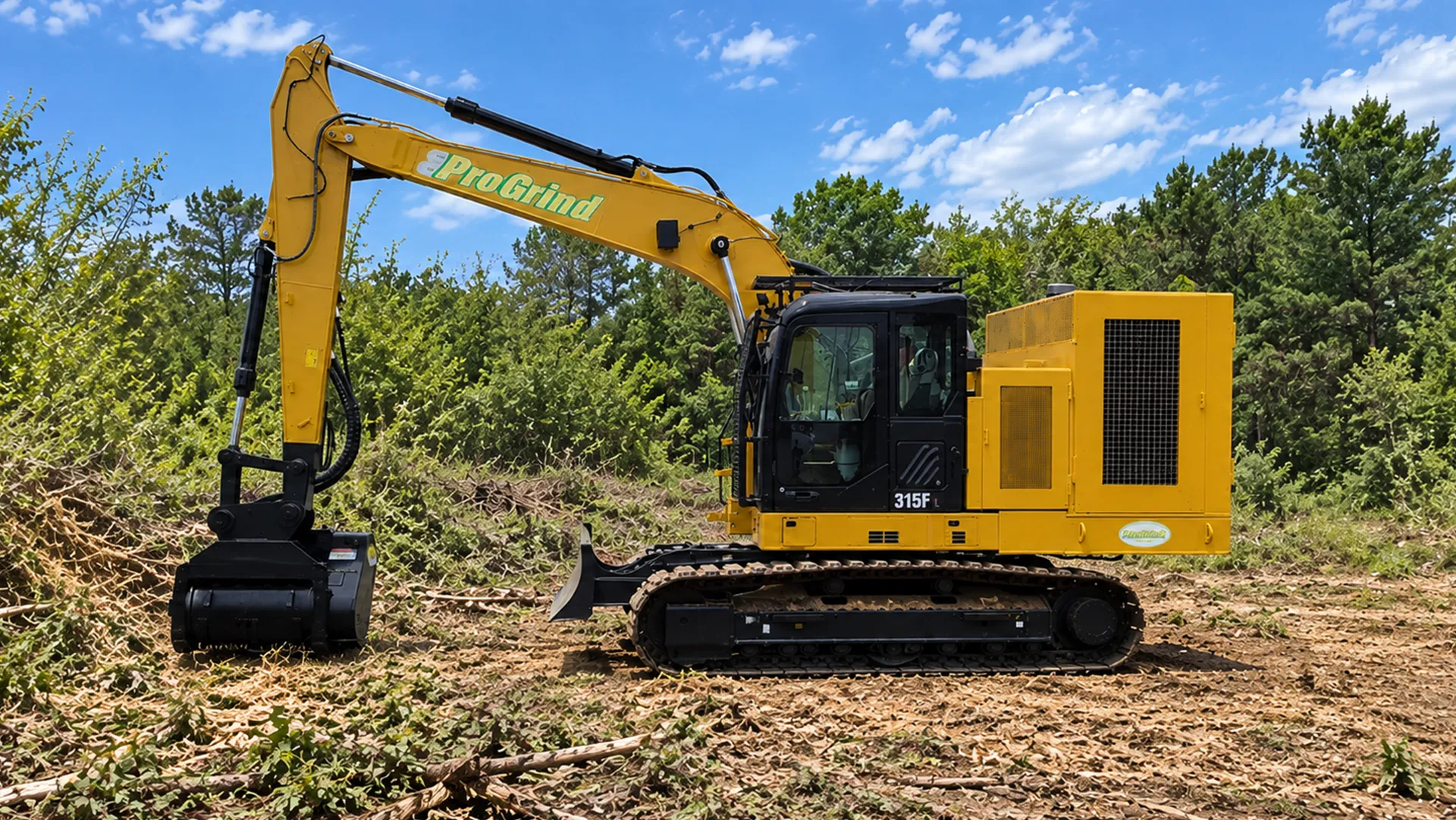
A self-powered attachment carries its own dedicated auxiliary power unit. It’s a diesel power pack that drives the mulching drum and the attachment’s own hydraulic system on its own, apart from the excavator. ProGrind builds its excavator mulcher attachments this way. Each one has a dedicated, high-horsepower power unit built right into the attachment.
Put simply: your excavator carries the attachment. A self-powered head brings the cutting power with it.
Why This Distinction Matters More Than the Excavator’s Hydraulics
For a standard excavator-powered attachment, hydraulic flow and pressure are the whole story. The excavator has to supply enough GPM and PSI on top of everything else it’s already doing. Fall short, and the head runs slow. It loses cutting power in dense material.
A self-powered attachment changes that math. The mulching drum runs on its own dedicated power unit. It doesn’t share the excavator’s fixed hydraulic supply. It isn’t competing with the boom, swing, and travel functions for the same output. That means:
- More consistent cutting performance. The drum keeps running at full strength through a full shift of heavy material, regardless of what else the excavator is doing at that moment.
- Less strain on the host machine. The excavator isn’t being asked to power the attachment and everything else at once, which reduces wear on its own hydraulic system over time.
- More flexibility across your fleet. Because the attachment isn’t relying on a precisely matched hydraulic output, it’s easier to run the same self-powered head across different excavators, provided the carrier’s weight class and mounting still fit.
That doesn’t mean hydraulic flow and pressure stop mattering. Carrier weight class and mounting compatibility still matter for any attachment, self-powered or not. But for a self-powered ProGrind attachment, the excavator’s hydraulic output stops being the deciding factor. The dedicated power unit already handles the cutting power on its own.
A Practical Way to See the Difference
Picture two crews clearing the same right-of-way, each running a different kind of attachment on a similarly sized excavator. Crew A’s head pulls its cutting power from the excavator’s hydraulics. When the operator swings the boom to reposition or travels to the next section, the mulching drum loses some of its available flow, and cutting speed dips with it. Crew B runs a self-powered head. The drum keeps its own dedicated power supply no matter what the boom or travel system is doing at that moment, so cutting speed stays steady from the first cut to the last.
Over a single pass, that gap might not be obvious. Over a full day of standing trees, brush, and stumps, it adds up to a meaningful difference in how much ground a crew actually covers.
That consistency also changes what a single machine can realistically handle in one day. When cutting power doesn’t dip every time the boom swings or the machine travels to the next section, a crew spends less time re-cutting material the head bogged down on the first pass — and less time waiting on one attachment to catch up before moving to the next task.
Where This Matters Most on the Job
The self-powered advantage shows up most clearly on the kind of work ProGrind attachments are built for:
- Right-of-way and utility corridor clearing, where the excavator is constantly repositioning around ditches, culverts, and fence lines, and the mulching head still needs to cut at full strength between moves.
- Municipal and agricultural clearing, where a single machine is expected to handle ditch lines, fence rows, and storm debris in one pass without losing power partway through.
- Commercial site prep, where clearing a defined footprint fast depends on the mulching head running at consistent strength for the whole job, not just the first few cuts.
In all three cases, the question isn’t just “can this excavator supply enough hydraulic flow.” It’s whether the attachment needs that supply in the first place.
What This Doesn’t Replace
Self-powered design answers the power question. It isn’t the only decision in buying an excavator mulcher attachment. You still need to confirm carrier weight class and mounting compatibility for any attachment. Cutting-head style, tooth type, and head sizing still depend on the material you clear most often. Our mulching head selection guide covers that side of the decision in more depth. Our buying checklist walks through the rest of the equipment-matching process. This piece covers the one factor those guides don’t: where the cutting power actually comes from, and why that changes what you can expect once the attachment is on the job.
Questions to Ask Before You Buy
- Does this attachment carry its own dedicated power unit, or does it draw its cutting power entirely from my excavator’s hydraulics?
- If it’s self-powered, what drives the power unit, and what’s the rated horsepower?
- If it relies on my excavator’s hydraulics, what flow and pressure does my excavator actually deliver, and does the attachment’s minimum requirement leave room to spare?
- Does the attachment’s weight and mounting configuration still fit my excavator’s carrier class?
- Can I see this exact attachment running in material similar to what I clear regularly?
Is a Self-Powered Attachment Worth the Extra Cost?
A self-powered attachment usually costs more upfront than an excavator-powered head with similar cutting capacity. It includes its own engine and hydraulic system, so that extra cost is built in. Whether the premium pays off depends on how you use it. A crew running standing trees, heavy brush, and stump work back to back for a full shift gets the most from it. Consistent cutting power means fewer stalled passes. It means less time spent re-cutting material. That’s a cost that doesn’t show up on the invoice. It shows up in how much ground gets covered by the end of the day.
Frequently Asked Questions
What does “self-powered” mean for an excavator mulcher attachment?
It means the attachment carries its own dedicated auxiliary power unit — typically a diesel power pack — that drives the mulching drum and the attachment’s hydraulic system independently of the excavator. The excavator carries the attachment; it doesn’t have to power it.
Does a self-powered attachment still need to match my excavator?
Yes, for weight class and mounting configuration. A self-powered head still has to fit your excavator’s lift capacity and quick-coupler setup. Here’s what changes: your excavator’s hydraulic flow and pressure are no longer the limit on cutting performance. The attachment isn’t drawing power from that system.
Why doesn’t a self-powered head compete with the excavator’s other functions?
Because it isn’t drawing from the same hydraulic supply. On an excavator-powered attachment, the mulching drum shares hydraulic output with the boom, swing, and travel systems. A self-powered attachment runs on its own separate power unit. Those other functions don’t cut into the drum’s available power.
Can I run a self-powered attachment across different excavators in my fleet?
Generally, yes, as long as each excavator meets the attachment’s weight class and mounting requirements. The attachment isn’t relying on a precisely matched hydraulic output from any one machine. That makes it more flexible across a mixed fleet than an attachment that depends entirely on the host excavator’s hydraulics.
The Bottom Line
Before comparing tooth types or drum widths, find out where an excavator mulcher attachment actually gets its cutting power. An excavator-powered attachment asks your excavator to supply and share hydraulic flow with everything else it’s doing. A self-powered attachment brings its own dedicated power unit, so it keeps cutting at full strength regardless of what else the excavator is handling at that moment.
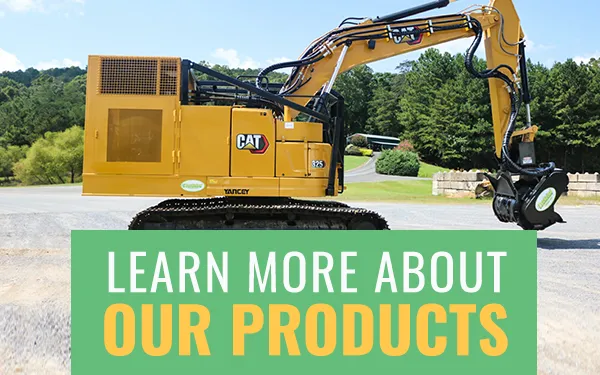
ProGrind builds its excavator-mounted mulching heads with dedicated auxiliary power, so the attachment brings its own cutting strength to every pass. Browse the full ProGrind product lineup or see the tree and stump grinder line built around that design.
Ready to see what a self-powered attachment does on your jobs? Talk With ProGrind and get a custom excavator quote.
Recent Posts