Renting vs. Buying a Land-Clearing Mulcher: What Contractors Should Weigh Before Their Next Big Job
Every contractor who runs excavator-mounted mulching equipment asks the same question eventually: rent the next mulcher, or buy one? There’s no single right answer for every crew. But there is a wrong way to decide — guessing. This guide breaks down the real costs, the breakeven math, and the equipment factors that should actually drive the decision.
The Real Cost of Renting a Mulcher
Rental rates look simple on paper. A daily or weekly number, a deposit, maybe a delivery fee. The real cost shows up once the job starts.
Most rental mulchers run off your excavator’s own hydraulics. That means the attachment competes with your machine for power. On tougher material, that can slow production fast. If the rental unit goes down mid-job, you’re not calling your own shop. You’re waiting on the rental counter. That downtime comes out of your schedule, not theirs.
Then there’s availability. The unit you need is rarely sitting in the yard the week you need it, especially during busy clearing season. Reserve too late, and you’re rescheduling the job around the rental company’s calendar instead of your customer’s.
Add it up. The daily rate. The fuel and travel to pick up and return the unit. The production loss from equipment that isn’t purpose-built for your excavator. The schedule risk of relying on somebody else’s inventory. None of that shows up on the rental invoice. All of it shows up in the job’s profitability.
When Renting Still Makes Sense
Renting isn’t the wrong call for every contractor. In a few situations, it’s still the right one:
- Occasional clearing work. If mulching is a small part of your business, a purchase may sit idle most of the year.
- A one-off job outside your normal scope. A single large clearing contract, bigger than your usual work, can justify a short-term rental instead of a purchase.
- Testing before committing. Contractors who haven’t run a self-powered mulching head before sometimes rent one first to confirm it’s the right fit.
Outside of those cases, the math usually starts to favor ownership.
The Breakeven Question: How Many Days a Year Do You Actually Need One?
The real decision comes down to utilization. Every rental day has a cost. Multiply that cost across a year of clearing jobs, and the breakeven point gets easy to see.
Start with three numbers:
- Your typical rental cost per day or week, including delivery and any required insurance.
- How many days per year you actually run a mulcher. Not how many days you’d like to. The real number, based on booked and expected work.
- The purchase price of a comparable self-powered mulching head, plus expected maintenance.
Multiply your rental cost by your annual usage days. Once that number gets close to what a purchase and its upkeep would cost over a few years, renting stops saving money. It starts costing you the flexibility and productivity of owning the equipment outright, on top of the dollars.
Here’s a simple way to picture it. A contractor renting a mulcher for 10 days a year at a few hundred dollars a day may never approach the breakeven point. A contractor running mulching work every week through spring, summer, and fall crosses that line fast, often within a single busy season. Right-of-way maintenance crews, land-clearing specialists, and sitework contractors with recurring clearing contracts tend to fall into that second group.
A rough rule of thumb: if you’re renting a mulcher more than once a month during your busy season, it’s worth running the numbers. If you’re renting it once or twice a year, ownership may not pay off yet.
The Hidden Cost Rental Math Misses
Rental-versus-purchase spreadsheets usually stop at the daily rate. They miss three costs that matter just as much:
Downtime you don’t control. A rented mulcher that breaks down mid-job puts you at the mercy of someone else’s repair schedule. Owned equipment gets fixed on your timeline, by people who know the machine.
Crew time lost to logistics. Picking up, dropping off, and inspecting a rental unit takes hours your crew isn’t clearing anything. Do that four or five times a year, and it adds up to real lost production days.
Jobs you didn’t bid. If you’re not confident a rental unit will be available — or powerful enough — for a demanding job, you may pass on work you could have taken with owned, purpose-built equipment. That cost never shows up on a rental invoice. It shows up on your annual revenue instead.
Most contractors only track the first cost. The other two are just as real. They just take longer to notice.
What Ownership Actually Changes on the Jobsite
Buying isn’t just about avoiding rental fees. It changes how a crew operates day to day.
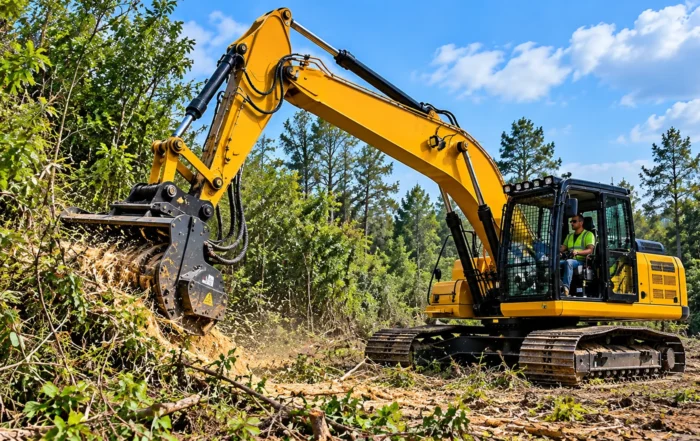
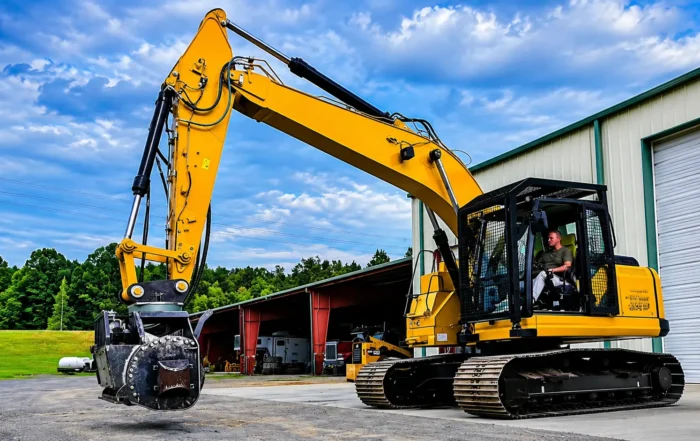
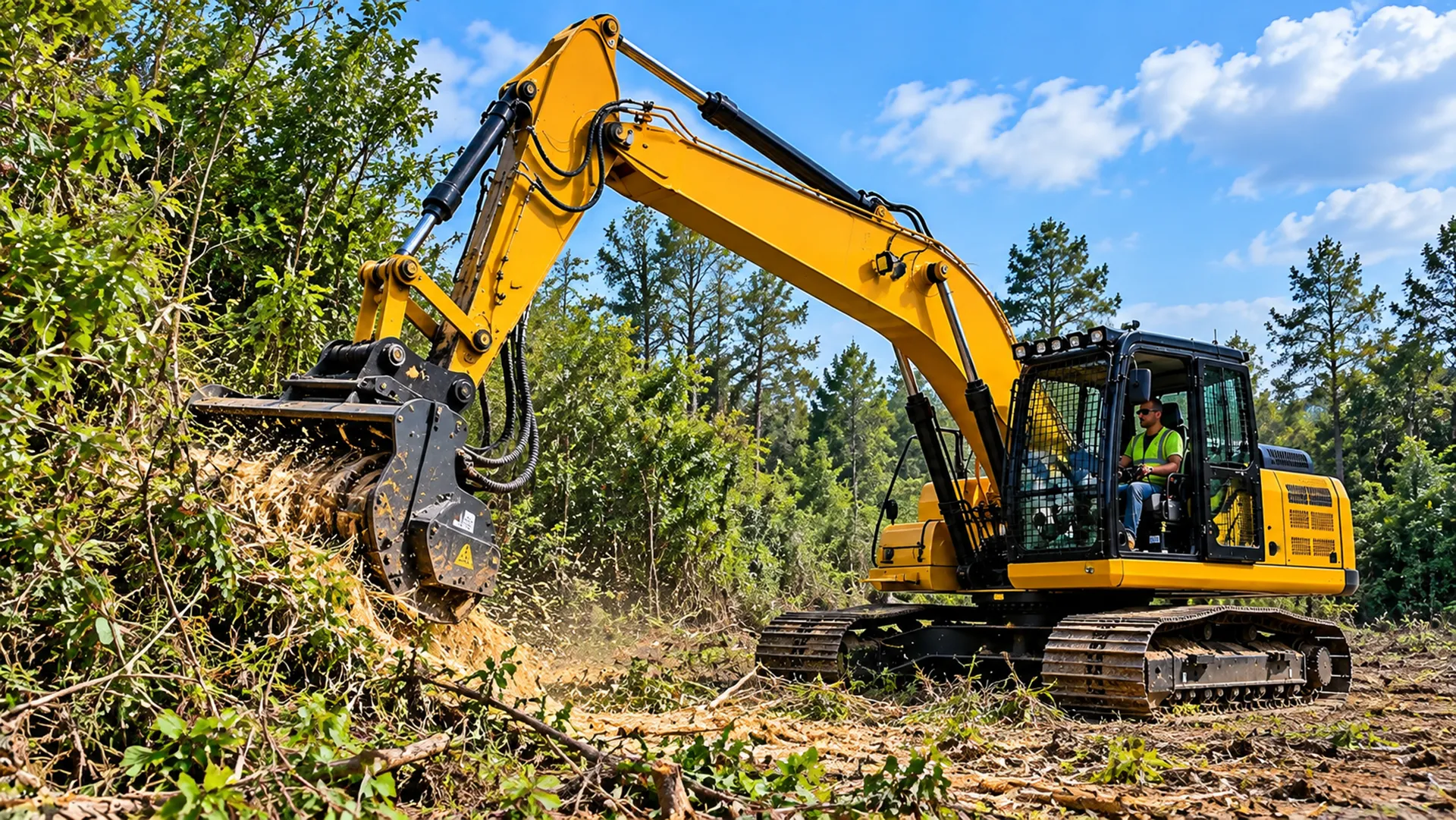
You’re not sharing power with the excavator. ProGrind’s mulching heads run on a dedicated auxiliary power unit instead of pulling entirely from your excavator’s hydraulics. That means more consistent cutting power on tough material, without draining the machine you still need to dig, grade, or load.
You control uptime. When you own the equipment, maintenance happens on your schedule, not a rental counter’s. A machine built with reversible carbide teeth and a rugged, field-tested design means less downtime waiting on parts or replacements mid-job.
You’re running one machine instead of two. Rental fleets often push contractors toward a separate stump grinder in addition to a mulching head. A system built to handle grinding and mulching functions means fewer machines to haul, fuel, and maintain. That matters on every job, not just the big ones.
You can bid more work with confidence. Owning reliable, purpose-built equipment means you’re not turning down a demanding clearing job because you’re unsure a rental unit can handle it, or because you can’t get one in time.
What to Look for If You Decide to Buy
Not every mulching head is built the same way. The differences matter more once you own the equipment long-term. Before buying, look for:
- Dedicated power, not shared hydraulics. A self-powered auxiliary unit protects your excavator and keeps cutting power consistent.
- Reversible, replaceable teeth. This extends the life of the cutting system and keeps repair costs predictable instead of unpredictable.
- U.S. manufacturing and real support. When something needs a part or a repair, a manufacturer that builds and supports the equipment domestically means faster answers and faster fixes.
- Field-tested durability, not just a spec sheet. Ask for jobsite demonstrations or references from contractors running the equipment on similar terrain.
- Multiple clearing functions in one head. A unit that cuts brush, grinds stumps, and mulches material reduces the number of machines you need on any given job.
ProGrind Systems builds its excavator-mounted mulching and grinding systems around exactly these factors. Dedicated auxiliary power, patented cutting technology, and U.S.-based manufacturing and support back every unit.
Making the Call for Your Business
The rent-versus-buy decision isn’t just about this job. It’s about the next twelve months of clearing work you expect to take on.
Pull your job records from the past year. Count the days a mulcher was on a jobsite, rented or otherwise. Multiply that by your rental cost, then compare it to a purchase price plus a few years of maintenance.
If the numbers land close together, factor in the hidden costs above: downtime, lost crew hours, and jobs you might have turned down. Those tend to tip the decision toward ownership for any contractor running mulching work on a regular basis.
And talk to your crew. The people running the machine every day usually know exactly where a rental unit slows them down, and where owned equipment would speed the job up. That input is worth as much as any spreadsheet.
Bottom Line
Renting a land-clearing mulcher makes sense for occasional or one-off jobs. For contractors running mulching work regularly, the daily rental cost, the production loss from shared-hydraulics equipment, and the schedule risk of relying on rental availability add up fast. Run the breakeven math on your own job volume, and ownership often turns out to be the more profitable call. It also comes with a machine built specifically for the work, instead of whatever happens to be available at the rental counter that week.
Explore ProGrind’s excavator mulching systems and tree stump grinders to see what owning purpose-built equipment could mean for your next job, or get in touch for a quote.
Frequently Asked Questions
Is it cheaper to rent or buy a land-clearing mulcher?
It depends on how many days per year you actually use one. Contractors who mulch regularly usually cross the breakeven point where ownership costs less than repeated rentals within a season or two. Occasional users may still come out ahead renting.
What’s the downside of a rental mulching attachment?
Most rental units run off the excavator’s own hydraulics rather than a dedicated power source, which can reduce cutting power and slow production. Rentals also carry availability risk during busy clearing season and put you at the mercy of the rental company’s maintenance schedule if something breaks.
How do I calculate the breakeven point between renting and buying?
Multiply your typical rental cost per day or week by the number of days per year you realistically use the equipment. Compare that total to the purchase price plus expected maintenance for a comparable unit over a few years.
What hidden costs does rental math usually miss?
Downtime you don’t control, crew hours spent picking up and returning the unit, and jobs you may not bid because you’re unsure a rental will be available or powerful enough.
What should I look for in a mulching head if I decide to buy?
Look for dedicated auxiliary power instead of shared hydraulics, reversible carbide teeth, U.S.-based manufacturing and support, and field-tested durability rather than just spec-sheet claims.
Recent Posts